Recycling and Sustainability at Moving Company London
 At Moving Company London, sustainability is built into the way we plan, pack, transport, and clear properties across the capital. Our aim is to make every stage of a move more responsible, from choosing low-carbon vans to reducing what ends up in landfill. We know that a modern London moving company has a role to play in the city???s wider environmental goals, so we focus on practical recycling and reuse measures that support a cleaner, lower-waste move.
Our key ambition is a recycling percentage target of 85% for suitable non-hazardous material collected during removals and clearance work. This includes cardboard, paper, soft plastics where accepted, metal, wood, and certain hard plastics, as well as items that can be passed on for reuse. By separating material early, our removal service in London can improve diversion from landfill and help clients make more sustainable choices without adding extra complexity to moving day.
We work with a network of local transfer stations and approved waste handling facilities across the city, allowing loads to be sorted efficiently and sent to the right processing route. In many parts of London, borough-level waste systems differ slightly, so careful separation matters. For example, some areas place extra focus on mixed dry recycling, food waste collection, and paper-only streams, while others encourage residents to keep glass, cans, and cartons separate. Our team follows those local patterns where relevant, supporting the smooth handover of reusable and recyclable material.
 A greener moving company in London should also think beyond collection and disposal. That is why we prioritise reuse first. Items such as wardrobes, desks, chairs, shelving, kitchenware, and gently used home goods are assessed for donation before recycling is considered. This approach helps extend product life, reduce waste, and support local community organisations that benefit from practical household items.
We maintain active partnerships with charities and reuse groups that accept suitable donations from home moves, office relocations, and property clearances. When items are in good condition, we aim to divert them to people who can use them again rather than sending them for material recovery. This is especially valuable during flat moves, student relocations, and downsizing jobs, where a large share of unwanted items still has useful life left.
At the same time, our crews are trained to identify materials that should go to recycling rather than reuse. Broken fixtures, damaged furniture components, and mixed packaging are separated where possible so they can be processed through the appropriate London waste channels. In boroughs that place emphasis on household separation, our approach aligns with that local responsibility by keeping recyclable streams cleaner and more efficient.
 Our low-carbon vans are a major part of the plan. We operate modern vehicles designed to reduce emissions, improve fuel efficiency, and support lower-impact urban travel. By using route planning, load optimisation, and fewer unnecessary trips, we cut both mileage and carbon output. For a London removal company, this makes a real difference in an environment where congestion, idling, and repeated short journeys can quickly increase emissions.
We also encourage smart packing methods that reduce waste at source. Reusable crates, recycled packing paper, and responsibly sourced protective materials help lower the amount of single-use packaging required for each move. Cardboard boxes are reused whenever possible, flattened for recycling after use, and sorted with other dry recyclables. This is particularly helpful in central and inner London moves, where recycling space may be limited and quick, tidy separation is important.
Our sustainability work includes attention to specialist items too. Electrical goods, metals, and certain office materials are handled with extra care so they can be sent to the correct processing route. Where applicable, we separate components such as cables, screens, frames, and metal fittings to improve recovery rates. In commercial clearances, this can be especially valuable because office furniture and IT-related waste often contain a high proportion of recyclable material.
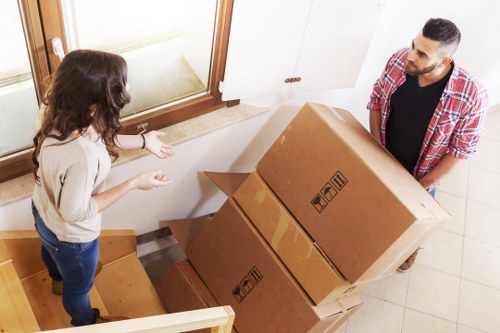 The recycling process also reflects the diverse waste practices found across London boroughs. Some areas prioritise separate collections for food waste, cardboard, and mixed dry recycling, while others have stronger demand for tidy bagged separation at source. Our teams adapt to those expectations when handling removals and clearances, helping to keep recyclable material uncontaminated and easier to process at transfer stations.
We are committed to responsible sorting, clear documentation where required, and working only with approved facilities. That means recyclable loads are not simply dropped off and forgotten; they are directed through channels that support legitimate recovery, reprocessing, and reuse. This helps ensure that our recycling-focused moving services in London are aligned with best practice and local environmental standards.
For customers, this creates a simpler and more sustainable moving experience. Whether it is a family home, a rented flat, or a business premises, we aim to reduce waste, recover usable items, and minimise emissions at each stage. The result is a sustainable London moving service that balances efficiency with environmental responsibility.
 Looking ahead, Moving Company London will continue to increase reuse, expand recycling routes, and strengthen charity partnerships so more items can find a second life. We will also keep improving our low-carbon fleet strategy and refining our sorting processes to move closer to our 85% recycling target. For us, sustainability is not an add-on; it is part of everyday operations and a core part of what modern moving should be.
By choosing a recycling-conscious moving company in London, clients can support better waste separation, reduce landfill, and make their move more environmentally responsible. From borough-aware sorting to local transfer stations, charity donation pathways, and low-carbon vans, every detail contributes to a cleaner way of moving across the city.