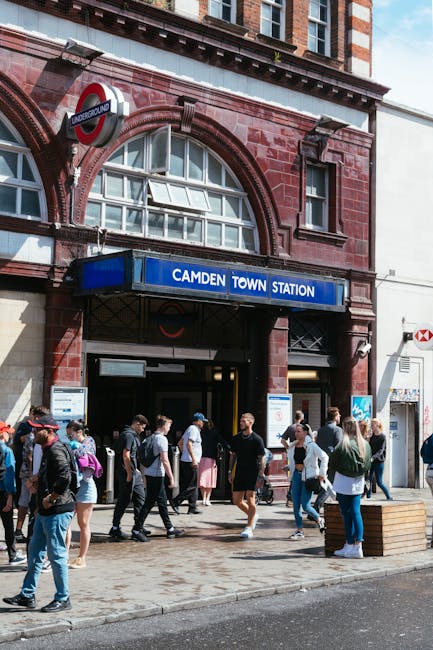
Camden High Street house removals guide local access tips
If you are planning a move around Camden High Street, you already know the tricky bit is rarely the boxes. It is the access. Narrow roads, passing traffic, busy pavements, awkward loading spots, flats above shops, and the general stop-start rhythm of Camden can turn a simple house move into a careful little puzzle. This Camden High Street house removals guide local access tips is here to make that puzzle much easier to solve.
In plain English, the aim is simple: help you plan a house removal that runs smoothly in a busy London setting. We will cover access checks, loading strategy, timing, parking realities, risk points, and the small details that save time on moving day. If you are comparing providers too, you can also look at house removals and removal services to see how different support levels fit your move.
Truth be told, Camden can be one of those places where a bit of planning makes the difference between a calm move and a long, sweaty delay with a sofa stuck halfway on the pavement. Let's keep it practical.
Why Camden High Street house removals guide local access tips Matters
Camden High Street is busy, compact, and full of movement at almost any time of day. That matters because removals are not only about lifting and transporting belongings. They depend on access: where the vehicle can stop, how close it can get to the property, how long unloading will take, and whether your route through the street stays clear enough for large items.
When access is tight, even a well-packed house move can go off track. A van may need to stop further away than expected. Stairwells may be narrow. Traffic can pause the whole process for several minutes at a time. If you are not ready for that, the day feels harder than it should. And nobody needs that. Moving is already a bit emotionally noisy.
Local access tips are valuable because they help you plan around real-world conditions instead of ideal ones. On a street like Camden High Street, that means thinking about curb space, building entry points, nearby restrictions, and how your removal team will handle busy pedestrian flow. It is not glamorous work, but it is the stuff that keeps a move on schedule.
Key takeaway: On Camden High Street, a successful house move is usually less about brute force and more about access planning, timing, and a clear unloading strategy.
How Camden High Street house removals guide local access tips Works
The process usually starts with an access check. That means looking at the property, the street, the vehicle size, and the most practical loading point. A good mover will ask questions such as: Is there room to park close by? Are there stairs, lifts, or narrow hallways? Is the property above a shop? Can a van stop without blocking traffic for too long?
Next comes route planning. Camden is one of those places where a route that looks fine on a map can be awkward in real life. Delivery windows, school traffic, market activity, and general daytime congestion all affect how quickly a removals vehicle can get in and out. Sometimes a smaller vehicle is the smarter choice. Sometimes it is better to use a larger van with a tighter loading plan. It depends on the building and the day.
Then there is the loading sequence. In busy areas, you want the heaviest and least fragile items first, but only if that fits the property layout. If the front door opens into a cramped hallway, you may need to stage items in a safer internal spot before moving them to the vehicle. That little bit of order can save a lot of shuffling.
Finally, there is communication. This is underrated. The client, removal team, and sometimes neighbours or building management all need to know what is happening, when, and where. A quick call or message before arrival can avoid the classic Camden scene where everyone is staring at everyone else while a sofa waits on the pavement.
Key Benefits and Practical Advantages
Good access planning gives you benefits that are easy to feel on moving day, even if they do not sound dramatic on paper.
- Less time lost to parking problems because the loading point is agreed in advance.
- Lower risk of damage since fewer last-minute lifts and awkward turns are needed.
- Better protection for neighbours and pedestrians when the team knows how to manage the route safely.
- Less stress for you because decisions are made before the boxes start moving.
- Smarter vehicle choice so the removals plan suits the street, not just the inventory.
There is also a financial angle, though it is worth being careful here. Poor access can make a move slower, and slower moves can be less efficient. Not always, but often. If the team has to park further away or carry everything a longer distance, the job becomes more labour-heavy. A detailed access discussion upfront helps reduce that risk.
For people moving from Camden flats or terraced homes, another advantage is confidence. You know what to expect. No surprises with a giant van that cannot get close enough. No awkward last-minute rearranging of the schedule. Just a more controlled move. Which, frankly, is what most people want on the day.
Who This Is For and When It Makes Sense
This guide is useful for anyone moving within, into, or out of the Camden High Street area. It is especially relevant if you are in a flat above retail premises, a converted building, a maisonette, or a property where street access is shared with shops, restaurants, or busy foot traffic.
It also makes sense if you have any of the following:
- large furniture that needs careful handling
- limited parking close to the building
- tight staircases or awkward turns
- a move scheduled during peak traffic hours
- delivery access that depends on time windows
- fragile items that need slower, more controlled loading
If you are comparing moving support levels, a smaller-scale service such as man and van or man with van can suit lighter moves, while a larger home move may need a full team through home moves or a dedicated house movers service.
When does it make sense to plan this carefully? Pretty much always in this area. But especially if the move involves multiple floors, older properties, or a narrow loading window. Camden does not forgive guesswork. It never really has.
Step-by-Step Guidance
1. Start with a proper access survey
Look at the property from the street as if you were carrying a wardrobe, not just walking past it. Measure door widths, hallways, stair turns, and any tight corners. Check whether a van can stop near the entrance without creating a blockage. If the building has a loading bay or a rear route, note that too.
2. Make a room-by-room inventory
A clear inventory helps the removals team decide what vehicle size and manpower are likely to be needed. It also helps you spot awkward items early, such as glass tables, bed frames, or oversized shelving that may need partial dismantling.
3. Choose your moving time with care
If you have any flexibility, avoid the busiest times on a congested London street. Early starts can be useful because the area is often calmer, though this depends on your building and local noise expectations. Midday may be busier. Late afternoon can bring added traffic pressure. There is no perfect slot, only the best fit for your day.
4. Confirm loading and parking arrangements
Do not assume the van will simply "find a spot." In Camden, it is smarter to agree in advance where the vehicle will wait, how long it may stay, and whether there is a fallback position if the original spot is taken. If you live in a managed building, speak to the management team or concierge early.
5. Prepare the property for fast movement
Clear hallways, protect floors, and make sure the route from front door to vehicle is as clean as possible. A few extra metres of clutter can slow everything down. That little pile of shoes by the door? It matters more than people think.
6. Pack the essentials separately
Keep a box or bag for essentials like chargers, keys, medicines, documents, toiletries, tea bags, and a change of clothes. In a busy move, you do not want to dig through five boxes just to find the kettle cable. Been there. Not fun.
7. Brief the moving team before unloading starts
Tell the team which items are fragile, which rooms are priority, and whether there are access quirks they should know about. For example, "the front door sticks a bit," or "the staircase turns sharply on the second floor." Small details, big difference.
Expert Tips for Better Results
Here is where a few practical, street-smart habits make the biggest difference.
- Use a smaller vehicle if access is tight. A slightly smaller van that can park nearer the building can sometimes beat a bigger one that has to stop further away.
- Pre-pack by access difficulty. Keep the easiest items ready to go first and separate anything awkward or oversized so the loading order is logical.
- Protect corners and thresholds. A bit of padding on door frames and stair corners can prevent scuffs when furniture is manoeuvred through narrow spots.
- Label boxes by room and priority. This reduces confusion when several rooms are being unloaded in a hurry.
- Check for lift bookings. If your building has lift access, book it or confirm it early. Otherwise you may end up carrying everything by hand. Not ideal.
- Keep neighbours in mind. A polite heads-up goes a long way in shared buildings and busy streets.
One useful local habit is to walk the route with the team before the first item comes out. That two-minute walkthrough often reveals the one awkward gate, step, or turn that would otherwise catch people out later.
And if you are dealing with a very urgent move, it can help to look at a service model like removals or, for more urgent city-based timing, read the practical ideas in same-day removals planning advice. The exact location is different, of course, but the lesson is the same: speed only works when access is sorted.
Common Mistakes to Avoid
Most removal delays in busy London areas are caused by predictable mistakes, not bad luck. That is actually good news, because predictable problems can be prevented.
- Assuming parking will be easy. It often is not. Always plan a realistic loading position.
- Ignoring stair and hallway measurements. A sofa that looks fine in the living room can become a problem at the turn of a staircase.
- Leaving packing too late. Last-minute packing creates chaos and slows the whole move.
- Not checking building rules. Some buildings have specific moving windows or access instructions.
- Forgetting about timing pressure. One delayed lift, one blocked pavement, and the day starts to slip.
- Not telling the removal team about obstacles. If the route is awkward, say so. Really.
Another common issue is underestimating how tiring repeated short carries can be. If the van cannot park right outside, you may face a series of smaller trips instead of one smooth unload. That is manageable, but only if you expect it.
Let's face it, nobody wants to discover the tricky bit after the fridge has already been loaded.
Tools, Resources and Recommendations
You do not need specialist equipment for every move, but a few sensible tools help a lot.
- Measuring tape for doors, corridors, stairs, and large furniture
- Furniture blankets to protect polished or vulnerable surfaces
- Straps and ties to secure items during transport
- Door protectors and corner guards for tighter properties
- Labels and markers for faster unpacking
- Strong boxes and tape because weak packaging is never a bargain
If you need help with packing, consider packing and unpacking services. For people moving heavier furniture or clearing items before the move, furniture pick up can be a useful extra. And if the load is heavier than expected, a suitable moving van or moving truck may be the better fit.
You will also want to think about the paperwork and booking side. For pricing clarity, the pages on pricing and quotes and payment and security can help set expectations before the move. No one likes financial surprises on top of boxes everywhere.
Law, Compliance, Standards, or Best Practice
For a house move in Camden, the most important compliance point is usually not some obscure technical rule. It is making sure the move is carried out safely, responsibly, and in line with local access realities. That means checking building requirements, respecting parking restrictions, avoiding obstruction where possible, and using safe lifting and handling practices.
Removal teams should work with sensible health and safety procedures, especially when there are stairs, heavy items, narrow routes, or shared entrances. If you are comparing providers, it is fair to look for clear policies on health and safety and insurance and safety. Those pages do not replace a conversation about your actual property, but they do show that a company is thinking beyond the obvious.
Good practice also includes treating the building with care, managing waste responsibly, and keeping disruption low for neighbours. If sustainability matters to you, the company's approach to recycling and sustainability may be worth reviewing. Small thing, perhaps, but these details say a lot about how a move is handled overall.
And yes, it is perfectly reasonable to ask questions. How will the team handle tight access? What happens if parking is limited? Do they have a backup plan? That is not being difficult. That is being sensible.
Options, Methods, or Comparison Table
Different moves need different approaches. Here is a straightforward comparison to help you decide what suits a Camden High Street property best.
| Option | Best for | Strengths | Possible drawbacks |
|---|---|---|---|
| Man and van | Smaller moves, light loads, flexible timing | Often nimble in tight streets, good for quick turnarounds | May not suit full-house loads or large furniture collections |
| Full house removal team | Family moves, larger inventories, more fragile items | More manpower, better for structured loading and unloading | Needs clearer planning and may require more access space |
| Packing plus removal service | Busy households, time-poor movers, delicate belongings | Less stress, better packing consistency, smoother move day | More involvement upfront and usually a broader service scope |
| Truck-based move | Large properties or high-volume moves | Strong for volume and multi-room homes | Can be awkward if Camden access is very limited |
For some readers, the best choice is not one big service but a combination. For example, a smaller vehicle for access plus packing support for fragile items. There is no prize for choosing the most dramatic option. Choose the one that fits the street.
Case Study or Real-World Example
Here is a realistic Camden-style scenario. A couple moves from a first-floor flat above shops on Camden High Street to a nearby residential street. They have a sofa, a bed frame, a dining table, and a mix of boxed belongings. At first, they assume a standard van will be fine because the distance is short.
Then the access questions start. The building entrance is narrow. There is limited waiting space outside. A delivery vehicle has already taken the most convenient stopping point in the morning. On the day itself, a larger van would have been awkward to position, and repeated short carries would have slowed the unloading.
So the move gets re-planned. The team uses a smaller vehicle, arrives earlier, and stages the furniture in a sensible loading order. The sofa goes last rather than first. Fragile boxes stay grouped together. The property entrance is padded. The couple keep essentials with them instead of buried in the van. The whole job becomes calmer, and, crucially, much less exposed to random delays.
The real lesson? The move was never "just" about transport. It was about working with the street as it is, not as you wish it were. Camden rewards that mindset.
Practical Checklist
Use this checklist before moving day. It keeps things tidy, which is harder than it sounds.
- Confirm the exact move date and arrival window
- Measure doors, hallways, stairs, and large furniture
- Check whether parking or loading space is available
- Ask about any building access rules or lift bookings
- Prepare a room-by-room inventory
- Pack essentials separately for quick access
- Label boxes clearly by room and priority
- Protect floors, thresholds, and corners where needed
- Tell the removal team about tight turns, low ceilings, or awkward entries
- Keep a phone charged and reachable on the day
- Plan what happens if parking is blocked
- Review insurance and safety details before you commit
If you want broader support beyond one street or postcode, it can help to compare removal companies and removal company service styles. That way you can see whether you need a simple van move, a fully managed service, or something in between.
Get a free quote today and see how much you can save.
Conclusion
A move on Camden High Street asks for more than a checklist and a good pair of gloves. It asks for local judgement. The streets are busy, the access can be tight, and the best removals plan is usually the one that respects the real shape of the area rather than fighting it.
If you take one thing from this guide, let it be this: plan access early, communicate clearly, and choose the moving setup that fits the building and the street. That alone prevents a surprising amount of stress. Not all of it, perhaps, but enough to make the day feel manageable.
And if you are still weighing up service levels, it never hurts to learn a bit more about the company behind the move. A quick look at the about us page can give you a feel for how they work. Small detail, but sometimes that is what gives you confidence.
Move steadily. Plan kindly. Camden will still be Camden, but your move does not have to feel chaotic.
Frequently Asked Questions
What makes Camden High Street removals different from a standard London move?
The main difference is access. Camden High Street is busier and tighter than many residential roads, so parking, loading distance, pedestrian flow, and timing all matter much more than they might on a quieter street.
Should I book a smaller van for Camden High Street?
Sometimes, yes. A smaller van can be easier to position near the property and may reduce loading delays. The right choice depends on how much you are moving and how much roadside space is available.
Do I need to measure my furniture before booking?
Absolutely. Measuring furniture, doorways, and stair turns helps prevent surprises on moving day. It is one of the simplest ways to avoid delays and awkward lifting.
What if there is nowhere to park outside my building?
That is common in busy areas. A good plan usually includes a fallback parking or loading option, plus a clear idea of how far the team may need to carry items from the vehicle to the property.
How far in advance should I plan access details?
Ideally as early as possible, especially if your move is in a managed building or during a busy time of day. Early planning gives you more room to solve parking and access issues before they become a problem.
Is packing service worth it for a Camden move?
It often is if you are short on time or have fragile belongings. Packing support can make the move smoother because the boxes are usually more consistent, better labelled, and easier to load.
What should I tell the removal team before they arrive?
Tell them about parking, entry points, stairs, lifts, tight corners, fragile items, and any building rules. The more practical detail you share, the better they can plan the job.
How can I protect my walls and floors during the move?
Use floor coverings, door protectors, and corner guards where needed. Also keep the route clear so furniture does not need to squeeze through obstacles. A little prevention goes a long way.
What is the best time of day to move on Camden High Street?
There is no universal best time, but quieter periods are usually easier for access and loading. Early starts can help in some cases, though you should also consider building rules and any noise sensitivities.
Do I need special permission for loading or parking?
That depends on the property and local parking conditions. Some moves only need a normal parking plan, while others require more careful coordination. It is wise to check in advance rather than assume.
What if my sofa or wardrobe will not fit through the stairwell?
Then the team may need to remove legs, doors, or parts of the item, or use an alternative route if one exists. This is why measurement and pre-planning are so important. It saves a lot of last-minute drama.
Can I combine removals with disposal or furniture pick-up?
Yes, in many cases that is practical. If you have items you do not want to move, a separate furniture pick-up can reduce clutter and make the main removal faster and cleaner.
How do I know if a removal company is suitable for this area?
Look for clear answers about access planning, vehicle choice, insurance, health and safety, and parking awareness. If they ask the right questions before the move, that is usually a good sign.